Walk down the bread aisle of a standard grocery store, and you are immediately met with a wall of identical, perfectly square loaves. They are incredibly soft, uniformly sliced, and engineered to sit on your counter for weeks without going stale. We’ve grown accustomed to this modern convenience, but in the pursuit of fast, cheap bread, we’ve quietly sacrificed both flavor and our well-being.
Real bread shouldn’t need a shelf life of three weeks, and it certainly shouldn’t require a paragraph of unpronounceable ingredients to make. This is exactly why the modern renaissance of traditional sourdough isn’t just a fleeting culinary trend—it is a vital return to how bread was always meant to be baked.
The Commercial Shortcut vs. The Artisan Tradition
To understand why sourdough is superior, we have to look at how modern commercial bread is made. Packet bread relies on highly active, laboratory-developed commercial yeast designed for one specific purpose: speed. This yeast forces the dough to rise in a matter of hours. To achieve that hyper-fluffy texture and extended shelf life, commercial bakeries rely on a cocktail of dough conditioners, added gluten, preservatives, and sugar.
Traditional sourdough is the absolute antithesis of the fast-food bread model.
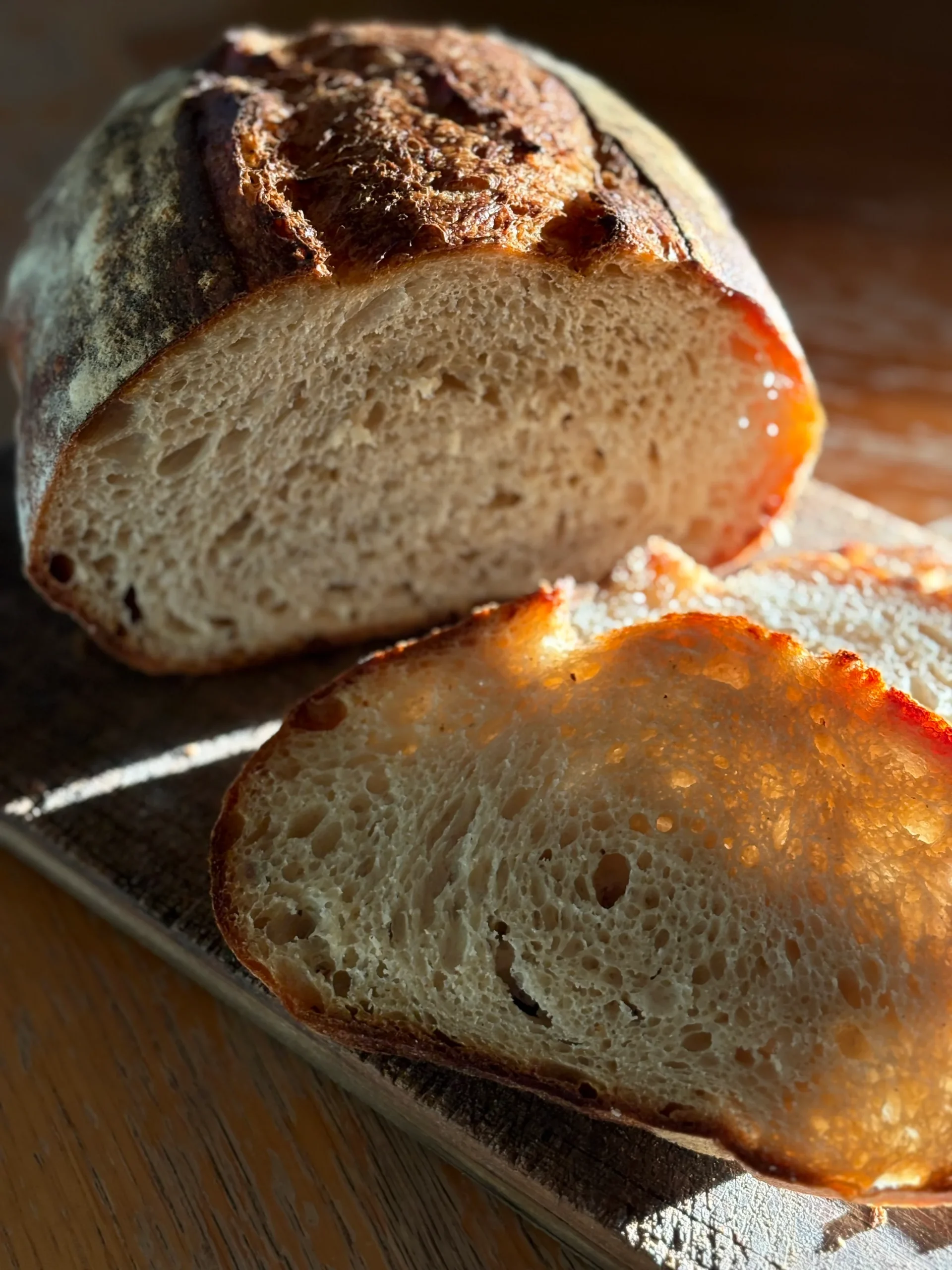
It strips the ingredient list back to the ancient basics: flour, water, and salt. Instead of a commercial yeast packet, sourdough relies on a “starter”—a living, breathing culture of wild yeast and lactic acid bacteria. This method cannot be rushed. It requires patience, skill, and a long, slow fermentation process that fundamentally transforms the dough.
The Hidden Health Benefits of Sourdough
That slow fermentation process does more than just develop a complex, tangy flavor and a perfectly blistered crust. It actually changes the chemical structure of the bread, unlocking a host of health benefits that commercial loaves simply cannot offer.
- Easier Digestion: During the long resting period, the wild yeast and bacteria essentially “pre-digest” the starches and break down the gluten proteins in the flour. For many people with mild gluten sensitivities, long-fermented sourdough is significantly easier on the stomach than commercial bread.
- Unlocking Essential Nutrients: Wheat is naturally rich in essential minerals like iron, zinc, and magnesium. However, these nutrients are locked away by phytic acid, which prevents our bodies from absorbing them. The lactic acid produced during sourdough fermentation neutralizes phytic acid, making these vital nutrients bioavailable.
- Steady, Sustained Energy: Because the sugars and starches are naturally depleted by the yeast during the long rise, sourdough has a distinctly lower Glycemic Index (GI) than packet bread. This means it won’t cause the rapid blood sugar spikes and subsequent crashes associated with highly processed white bread.
- Supporting Gut Health: The fermentation process introduces beneficial prebiotics into the bread. While the probiotics are baked off in the oven, these prebiotics survive to feed the good bacteria in your own digestive system.
“Good bread is not made in a factory; it is grown, nurtured, and allowed the time it needs to become something truly nourishing.”
A Mindful Return to Better Bread
When we choose a loaf of slow-fermented artisan sourdough, we are choosing more than just a superior vessel for our morning avocado or butter. We are rejecting the heavily processed shortcuts of modern food manufacturing. We are choosing a product that respects the ingredients, honors the craft of the baker, and actually nourishes our bodies the way food is supposed to.
It might take a little longer to make, and it might not last on your counter for a month—but once you experience the complex flavor and the way real bread makes you feel, you will never look at the supermarket bread aisle the same way again.